In Midlothian, Mayfield and Easthouses Development Trust (MAEDT), with support from Midlothian Council, has developed a pioneering pantry network. This initiative aims to share resources and work more strategically to provide good quality food equitably across the county. The network builds on MAEDT’s successful pantry model and responds to the growing need for dignified, community-led food provision.
Background and Context
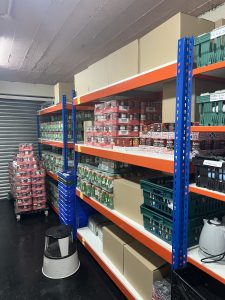 MAEDT was established in 2007 to support the sustainable regeneration of the Mayfield and Easthouses community. Its mission encompasses economic, social, environmental, and cultural development. Since 2021, MAEDT has operated a community pantry, offering affordable food in a welcoming, shop-like environment. Unlike foodbanks, the pantry model is inclusive, open to all without means testing, and designed to integrate into the community through accessible shopfronts and flexible opening hours.
Despite the success of MAEDT’s pantry, disparities in access to affordable food persisted across Midlothian. Pantries vary in size, stock, and resources. Informal food sharing was common among organisations committed to reducing waste, however, MAEDT recognised the need for a more strategic approach to ensure access to food is equitable.
What is the pantry model?
Unlike foodbanks or pop-up food distribution models, pantries operate like regular shops with flexible hours, including evenings and weekends, to suit diverse community schedules. Membership is open to all, without means testing or the need to explain personal circumstances, making the model inclusive and dignified. Designed with accessible shopfronts, pantries aim to be welcoming local food outlets that integrate into the community, encouraging footfall and fostering a sense of belonging.
Find out more about the Midlothian Pantry Network.
The Community Café and Garden
 The MAEDT Community Café and Garden exemplify many aspects of Community Wealth Building. The café, once a derelict bowling pavilion, was transformed through an ownership claim. MAEDT holds a long-term lease from the council, allowing them to apply for improvement funding while the council retains liability.
The café was fitted with a kitchen provided by the local housing association and now operates as a social enterprise. The Café employs staff at above the real living wage and supports volunteers facing barriers to traditional employment. The café hosts employees supported through the Parental Employability Support Fund, with previous participants moving into meaningful roles. The café is financially self-sustaining.
The café hosts a wide range of activities, including arts groups, corporate volunteering, walking groups, Citizens Advice sessions, parties, litter picking, seed planting with nursery children, a men’s shed, and a bike repair project. The pantry stocks surplus vegetables from the community garden.
Solar panels have been installed on the polytunnel and shelter in the community garden through community benefit funding.
The Pantry Network
 MAEDT already work closely in partnership with Midlothian Council supporting cost of living interventions. MAEDT successfully bid for funding from the Midlothian Council Cost-of-Living Taskforce to create The Midlothian Pantry Network. The network was designed to reduce inequalities in food access, support less-resourced pantries, promote best practice and look at sustainable operational models.
MAEDT’s visibility in the community, particularly through the success of their Pantry, the Pavilion Community Garden and Café, positioned them well to lead this work and host the Pantry Network. They were mindful of the advantages this visibility brought, such as access to community benefits through council procurement, and committed to sharing these benefits across the network.
The funding (£65k) enabled MAEDT to renovate a garage to food safety standards for bulk storage, purchase fridges and freezers, and recruit a full-time network coordinator for 18 months. Communication across the network is facilitated through a WhatsApp forum, and they have use of the MAEDT van, which was acquired for MAEDT, through community benefit agreements with the council, for food collections.
Impacts and Benefits
 The Pantry Network has delivered tangible benefits across Midlothian. Bulk purchasing has significantly reduced costs, and surplus food (such as large quantities of eggs from local farmers) can now be distributed efficiently across multiple sites. One
of the member pantries estimates savings of around £100 per week through the network.
The Pantry Network has also fostered collaboration and learning. A volunteer week event hosted at the MAEDT Community Café brought together volunteers from across the county to explore the differences between pantries and foodbanks, discuss stigma, and engage with Nourish Scotland’s dignity principles. This session was well received and helped connect local volunteers to national conversations about food justice.
Informal resources are also shared. For example, MAEDT’s arrangement with the community payback team to collect surplus cardboard is now available to other pantries. The network facilitates the sharing of opportunities, such as awareness of charities like InKind Direct, and enables culturally sensitive food distribution based on local demographics.
Each pantry in the network has received additional financial support directly from the Cost of Living Taskforce alongside access to shared infrastructure and expertise from the Pantry Network. An emerging focus of the Pantry Network is promoting sustainability through enterprise and encouraging pantries to develop robust business plans. MAEDT demonstrates this approach through its own initiatives: a clothes donation shop generates income that directly supports the pantry, while café venue hire, community events, and craft stalls provide additional revenue streams.
Recognising that not all pantries have the facilities or capacity to enterprise in the same way, the network is working to encourage members to explore what is feasible within their own contexts. By fostering a culture of innovation and reducing reliance on grant funding, the network supports pantries to plan for long-term sustainability.
Challenges and Learning
 Hosting the Pantry Network has not been without its challenges. MAEDT is acutely aware of the perception that, as the lead organisation, they may benefit disproportionately from the initiative. To address this, they have implemented systems to weigh and measure food distribution across the network, ensuring transparency and fairness. Maintaining trust among partner organisations is essential, and MAEDT is committed to evidencing equitable practices.
Leadership within the network requires a careful balance. MAEDT is intentional about supporting other pantries without imposing its own ways of working. While they share resources and promote good practice, they remain open to learning from other pantries and recognise the value of diverse approaches. Their role is not to dictate, but to facilitate collaboration and mutual support.
A key learning has been the importance of relationships with both major food retailers and with volunteers and organisers across the network. The appointment of a dedicated coordinator has been instrumental in managing these connections and fostering a collaborative spirit. The success of the network also reflects the strategic alignment with Midlothian Council, whose prioritisation of poverty and cost-of-living issues has been crucial in securing funding and enabling this work to flourish.
Future Ambitions and Community Wealth Building
MAEDT is exploring the feasibility of replacing foodbanks with pantries across Midlothian. This ambition reflects a broader commitment to dignity, sustainability, and community-led solutions to poverty.
This example demonstrates how money spent on poverty reduction can contribute to community wealth building – through the network, pantries are being supported and encouraged to enterprise and create sustainable plans so they do not solely rely on external funding streams to continue providing their essential community services.